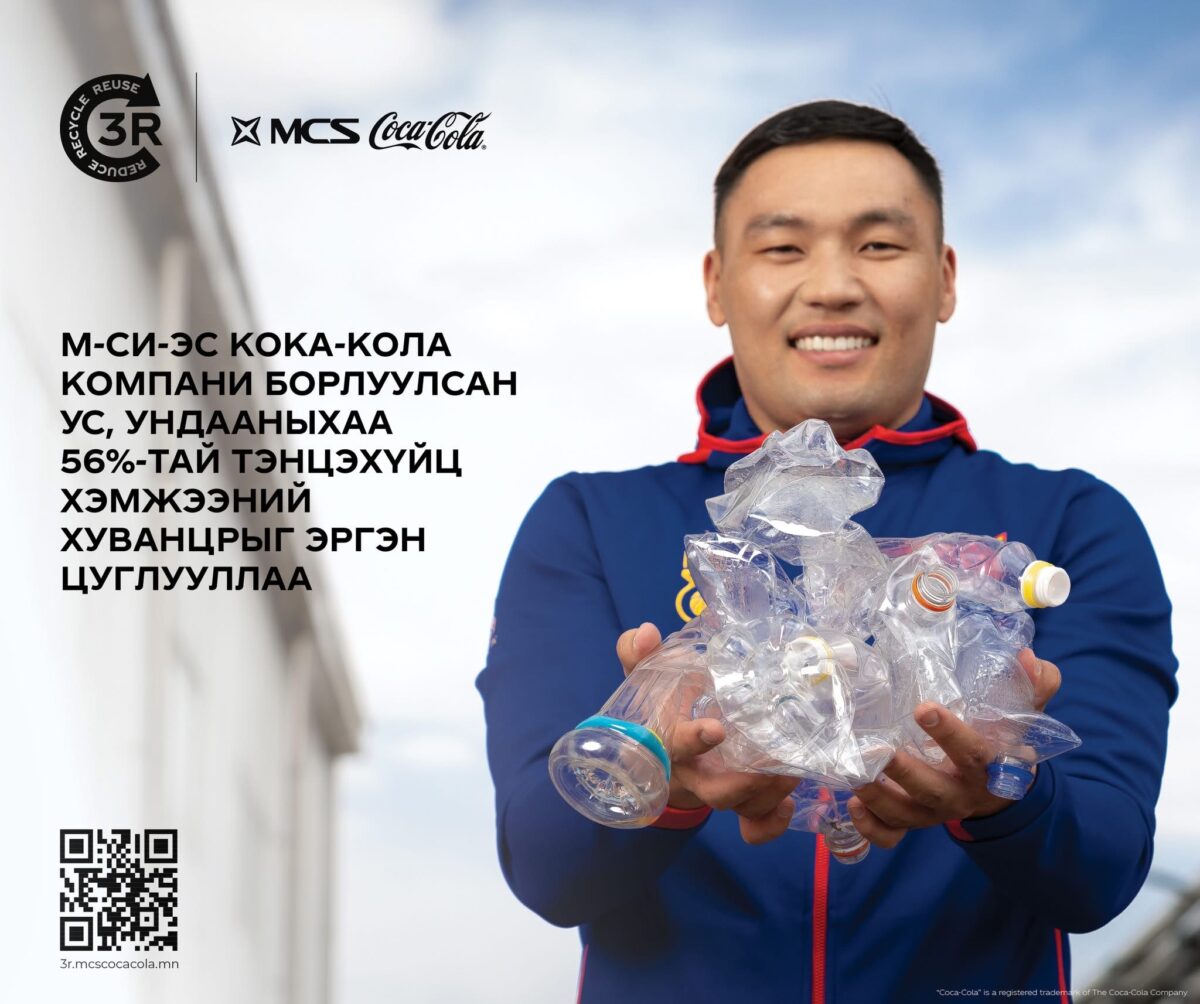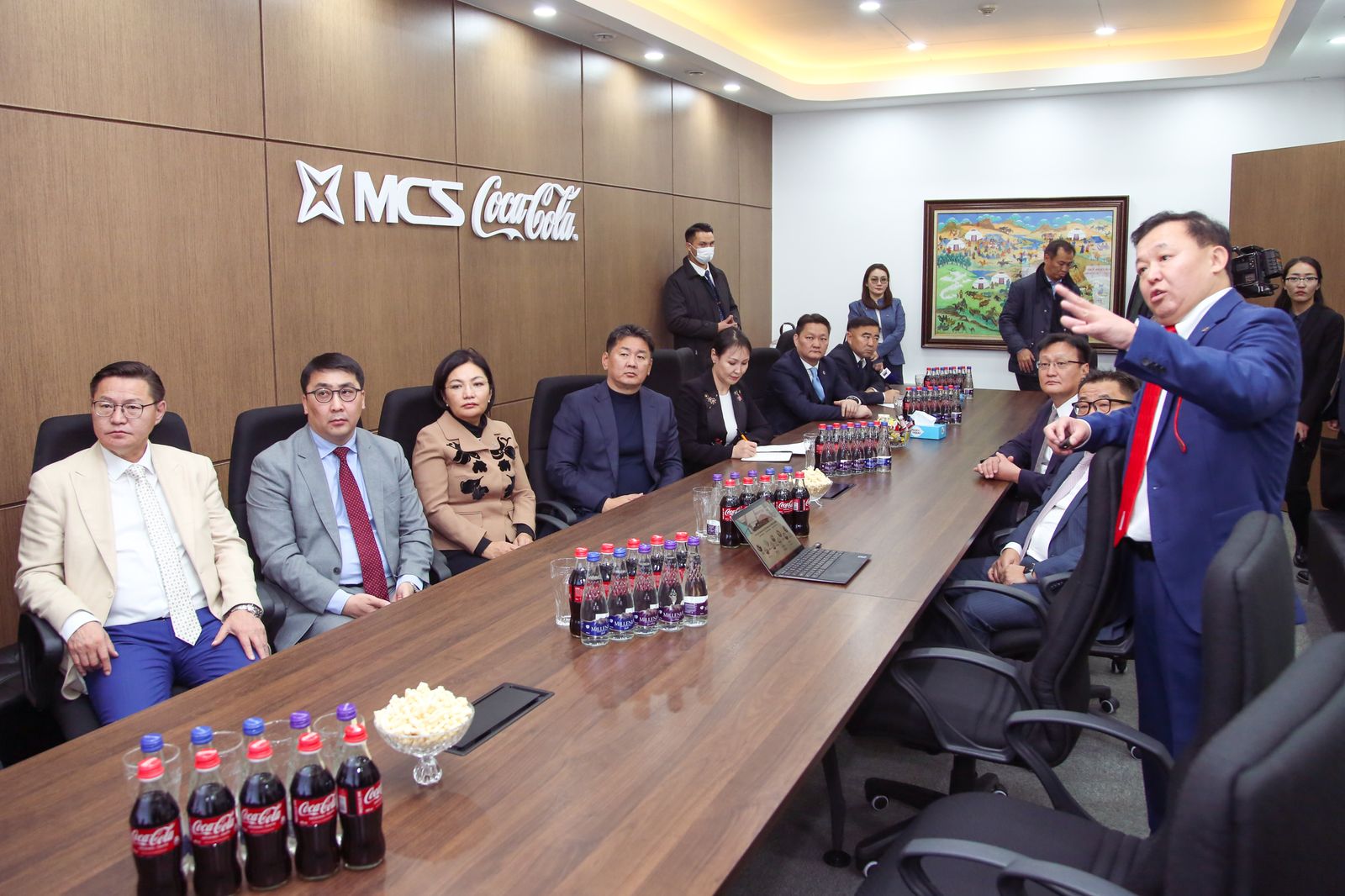

MCS Coca-Cola has set a goal to collect and recycle packaging equivalent to the bottles and containers it sells by 2030. As part of this journey, the company is working toward introducing products packaged in bottles made from 100% recycled materials, processed locally in Mongolia from raw material to final product.
To help enable the introduction of recycled packaging in Mongolia, MCS Coca-Cola launched a plastic sorting and collection awareness campaign in 2022, with the aim of encouraging responsible consumer behavior and supporting plastic collection efforts nationwide.
At a time when waste management systems in Mongolia were still developing, and when sorting waste at source and supplying recyclable materials to recycling facilities was not yet widely established among households and businesses, the initiative faced numerous challenges. In response, MCS Coca-Cola has been collaborating with the TML recycling plant and the plastic collection and logistics company SESL to help strengthen a nationwide plastic collection, transportation, and recycling value chain.
Over the past four years, these efforts have helped establish 1,610 partner locations across the country that sort and collect plastic at the source.
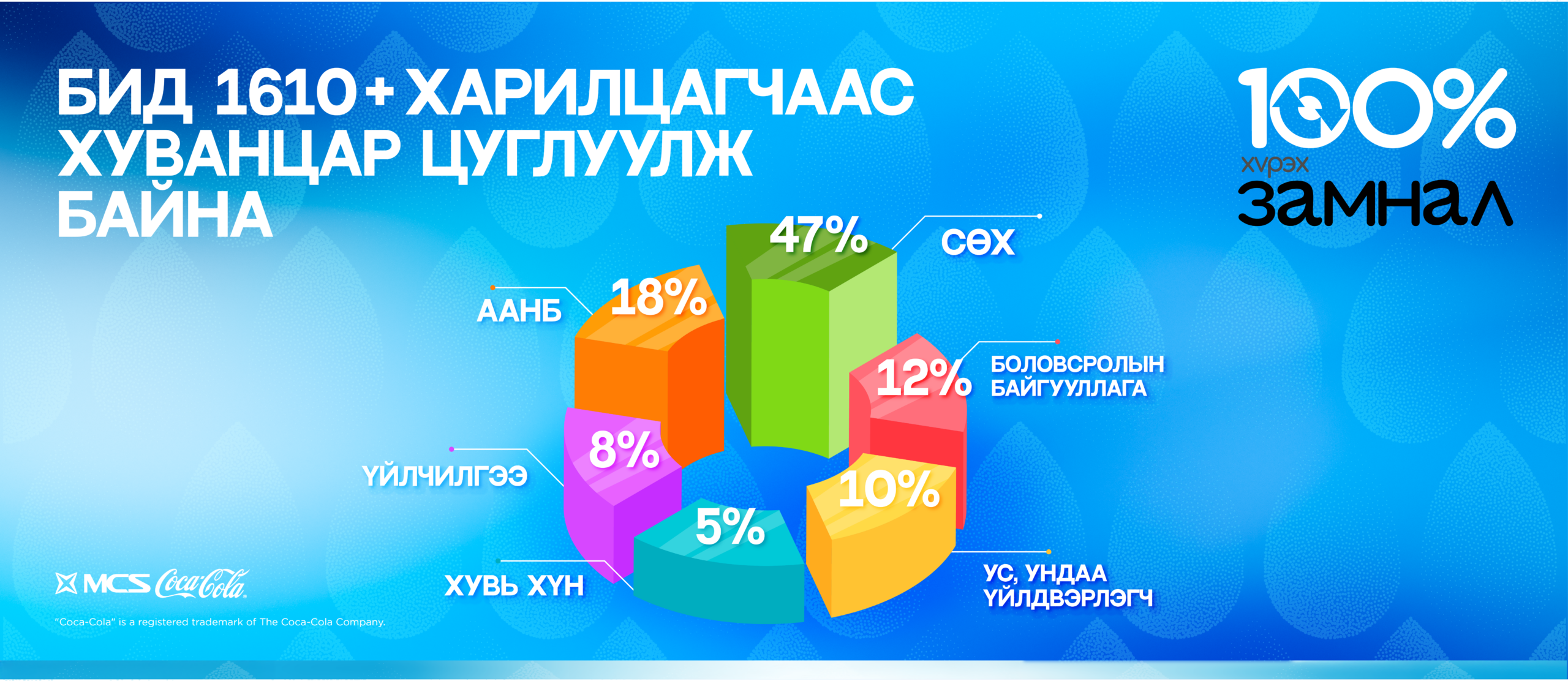
Each year, the company compares the volume of plastic collected with the volume of products sold. As of 2025, plastic collection has reached 50.2% relative to annual sales, reflecting continued progress toward the company’s collection ambitions.
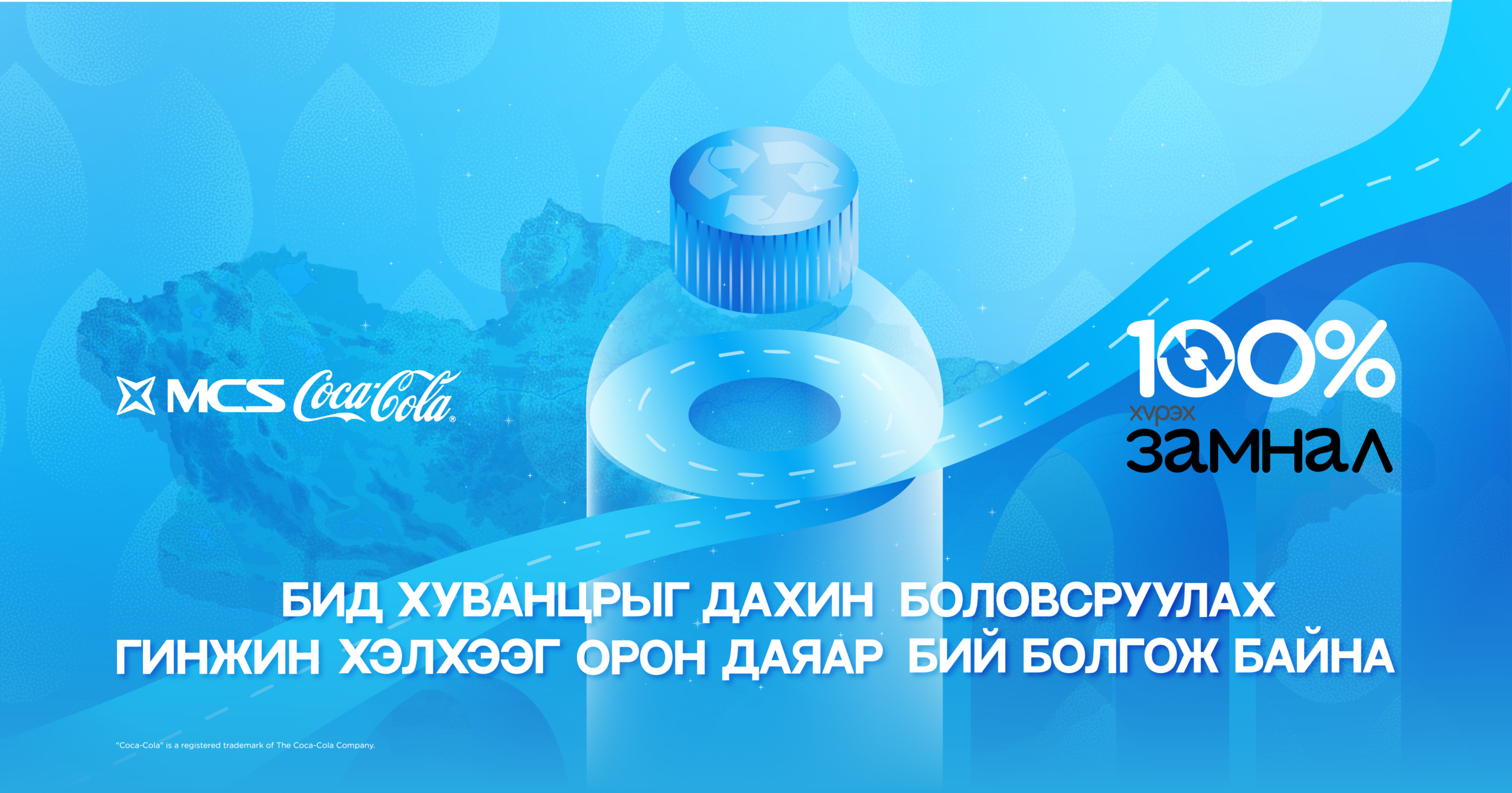
To share its experience, MCS Coca-Cola has launched the “ROAD TO 100%” campaign, highlighting the path it has taken so far, the challenges encountered, and the progress achieved.
Because sustainable development is not defined by one-time solutions or quick wins, the campaign invites the public to explore how learning through trial, adaptation, and continuous improvement helps move these efforts forward over time.
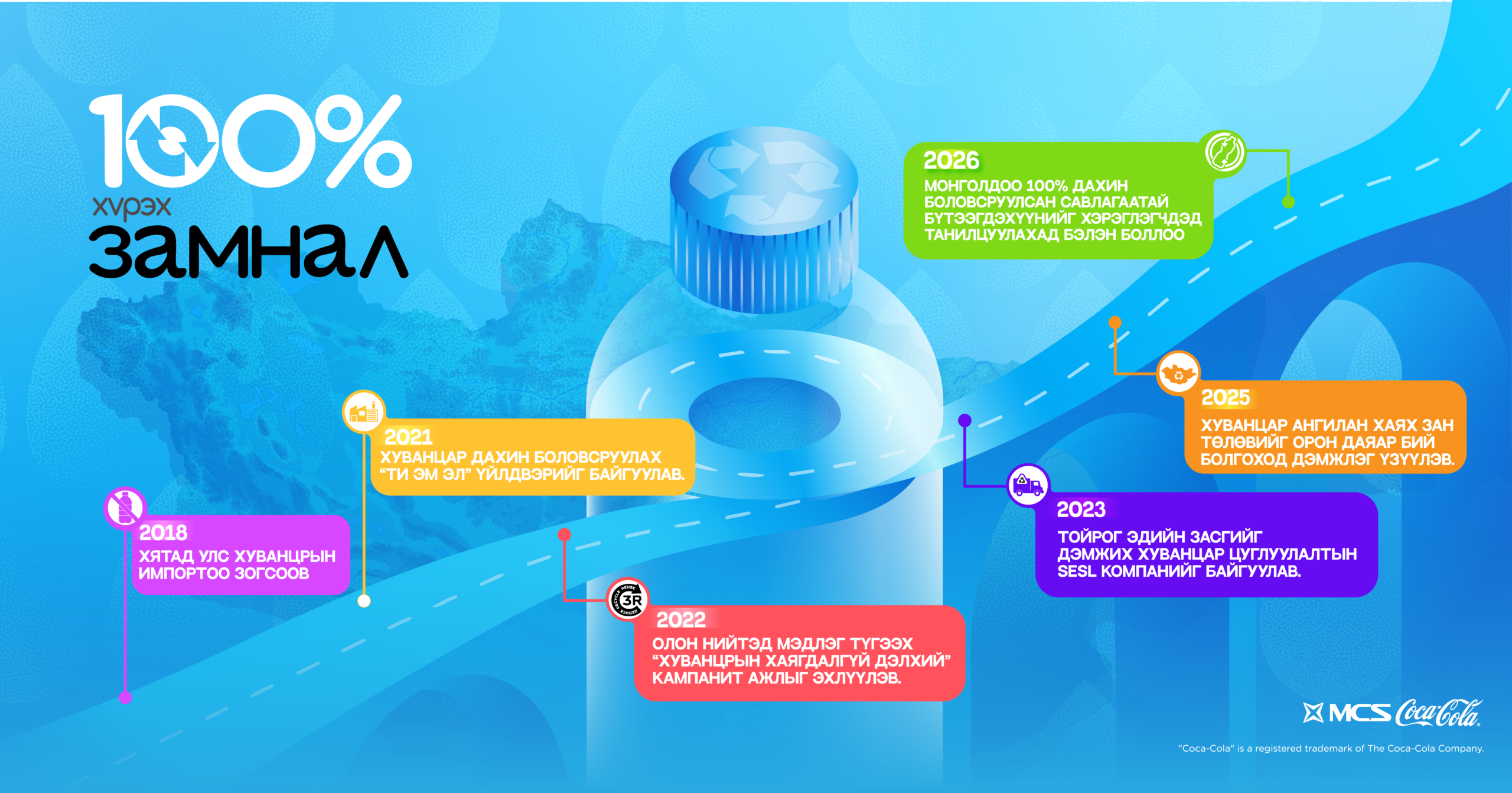
ROAD TO 100%
2018
In Mongolia, annual consumption of plastic beverage bottles was estimated at approximately 18,000 tons. While a portion of used plastic had previously been exported, changes in international import policies led to a growing need to address plastic waste domestically.
During this period, an initiative brought together more than 200 bottling partners worldwide under a shared commitment to support waste reduction and recycling efforts.
2021
In response to local conditions, MCS Coca-Cola partnered with TML to support the establishment of a food-grade PET plastic recycling facility that meets international standards. The TML recycling plant officially began operations in 2021.
2022
MCS Coca-Cola announced its ambition to help collect and recycle plastic bottles equivalent to those used in its beverage products, and launched a national plastic collection awareness campaign in Mongolia.
At the time, around 60% of households disposed of plastic together with general waste. For many people, separating plastic was a new concept, and there was limited clarity around where sorted plastic could be delivered or collected, which reduced motivation to sort waste.
2023
To support the stable operation of the recycling facility and help ensure a consistent supply of raw materials, SESL (Save Earth Save Life) was established to focus on plastic collection and transportation. Efforts to encourage waste sorting at the source, expand collection points, and improve regular transportation of collected plastic were intensified.
2024
Although SESL reached out to many organizations with high plastic usage to propose cooperation, participation remained limited. Challenges related to consumer behavior, habits, legal frameworks, and infrastructure highlighted the need for continued, collaborative solutions.
2025
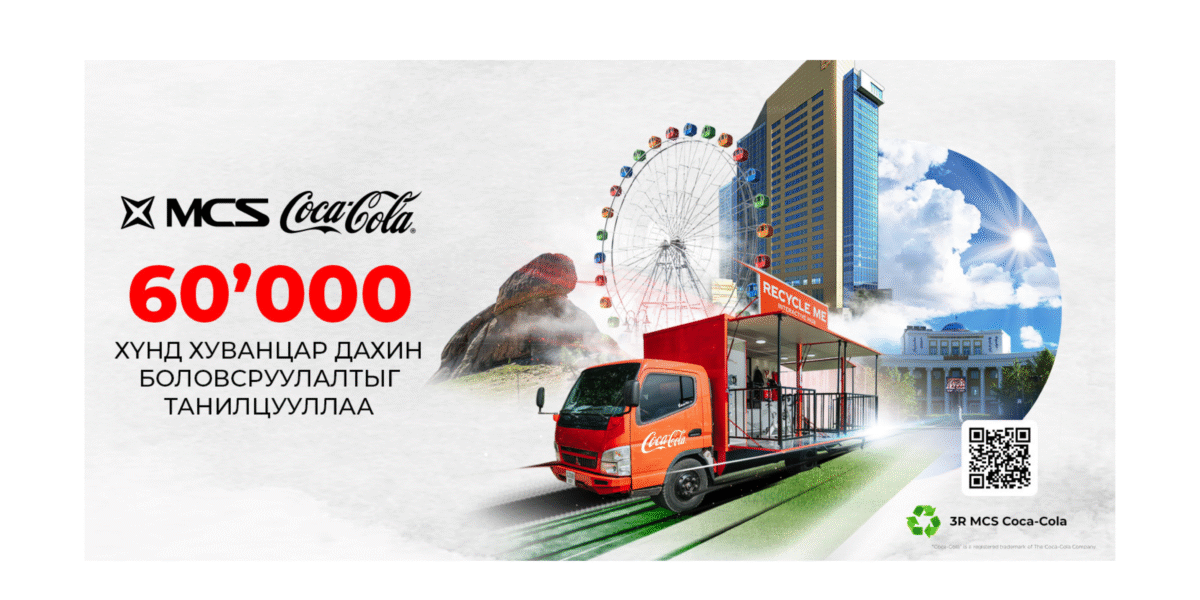
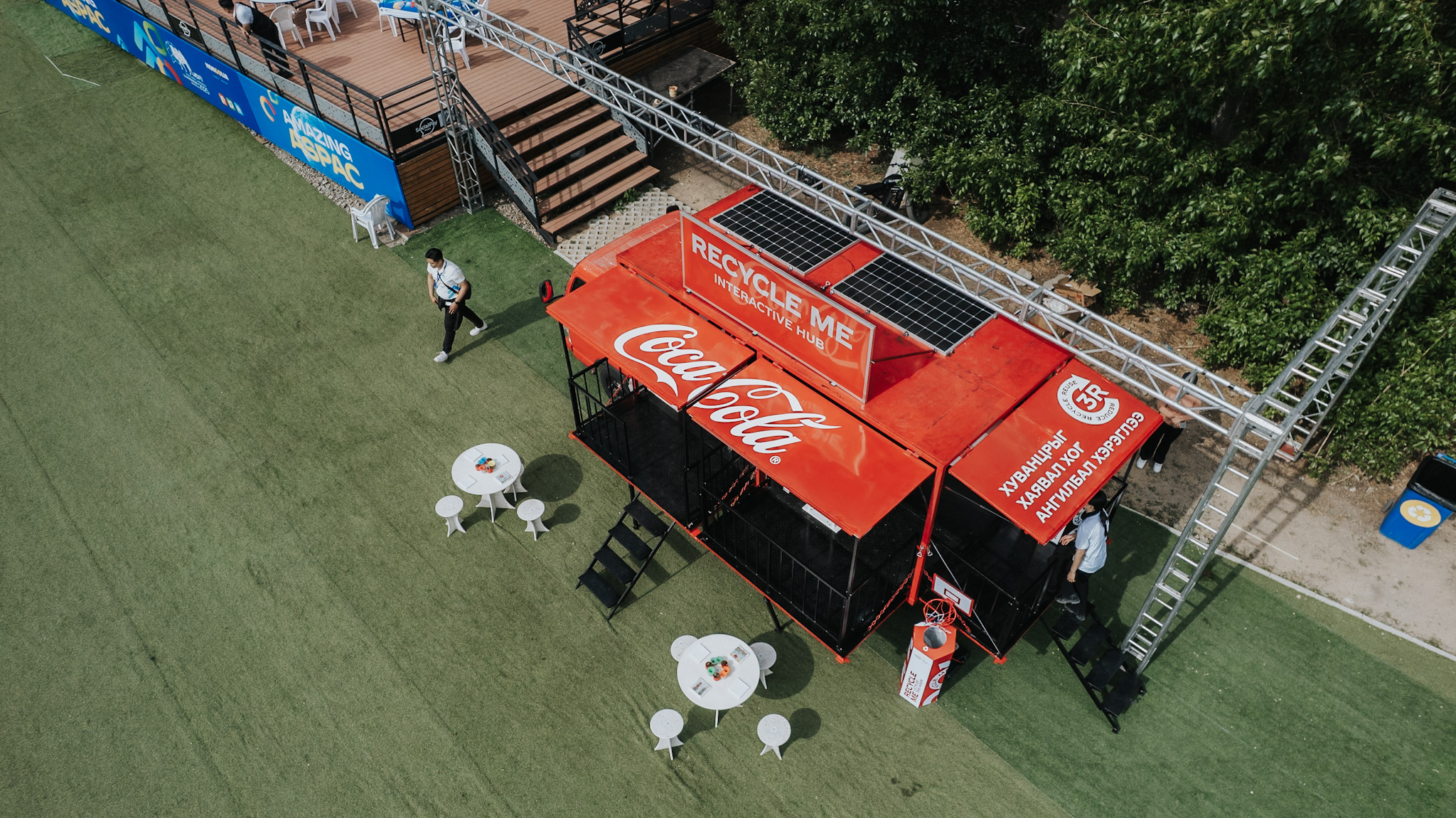
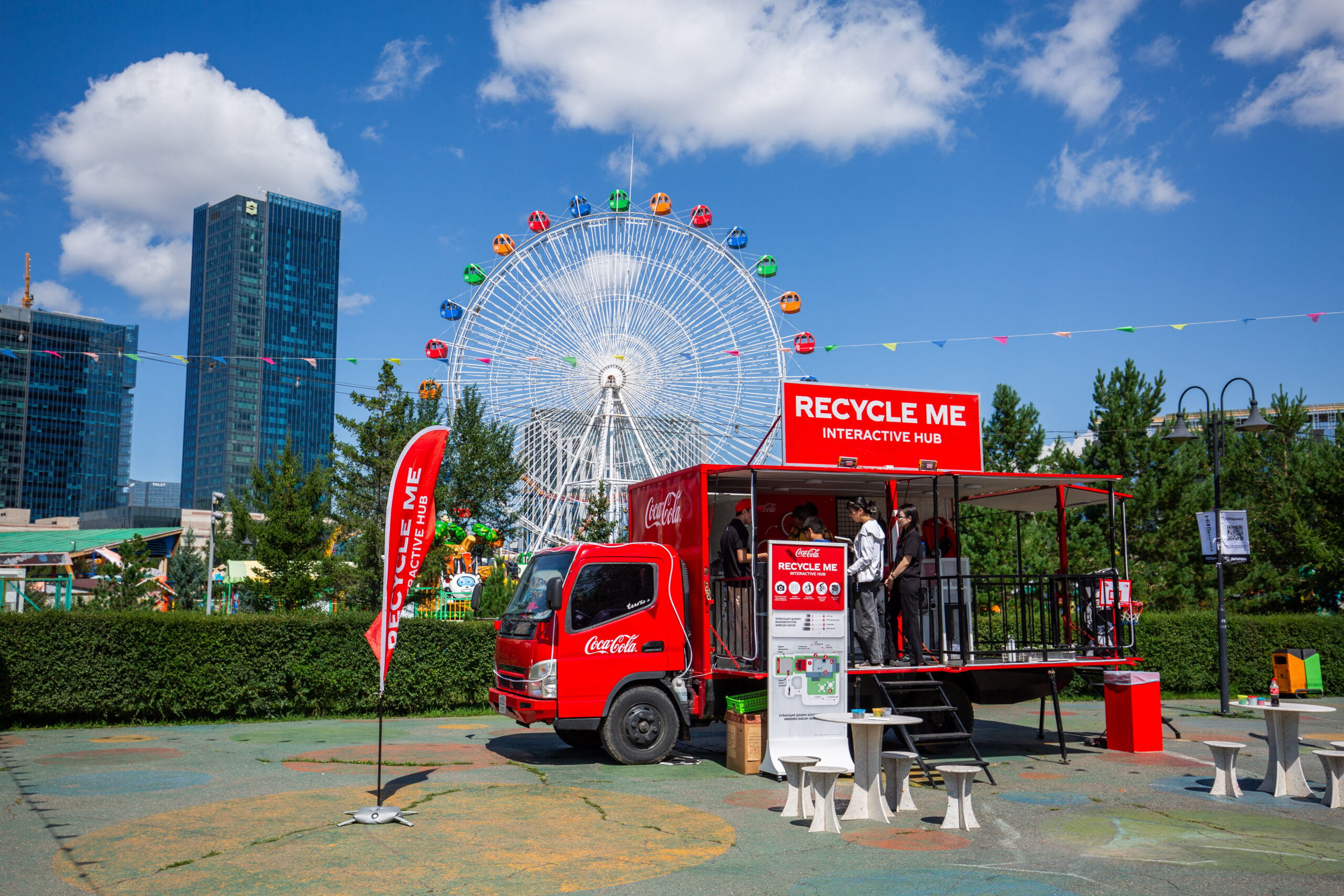
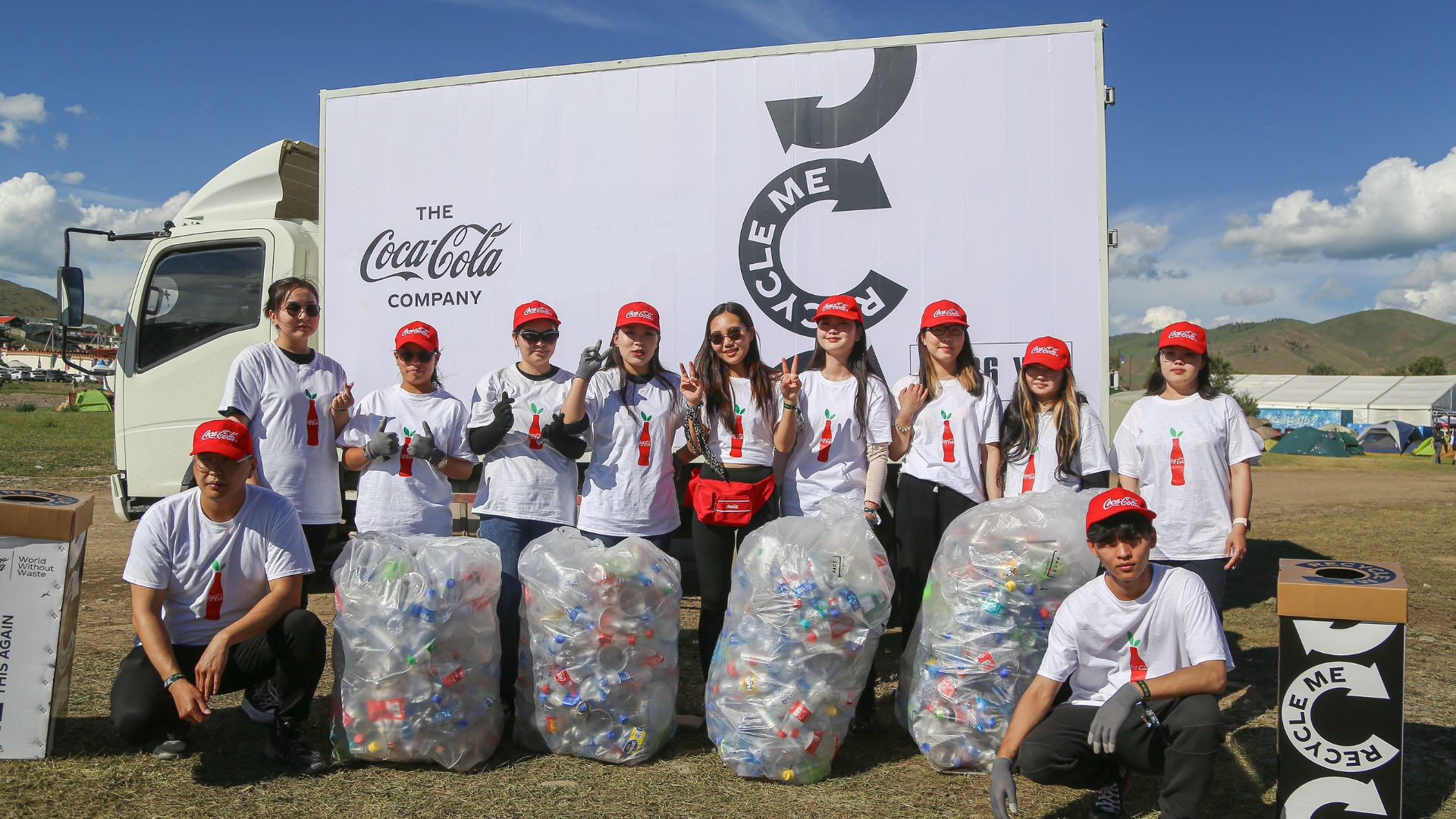
Among several public engagement initiatives, the “Recycle Me Interactive Hub” mobile education center was launched to raise awareness about the importance of plastic sorting and recycling. In addition, since 2022, plastic collection activities have been conducted annually at major public events such as the Playtime Music Festival, 3×3 basketball tournaments, and National Naadam celebrations near the Central Stadium.
2026
Today, the number of consumers who sort their plastic waste continues to grow. As a result of ongoing efforts, the foundations of a plastic sorting, collection, transportation, and recycling value chain are taking shape in Mongolia, reinforcing the idea that plastic becomes waste when discarded, but a resource when sorted.
Thus, MCS Coca-Cola Company has joined the global recycling movement implemented by the Coca-Cola system worldwide, and the historic milestone of introducing products with 100% recycled packaging to the market is drawing ever closer.
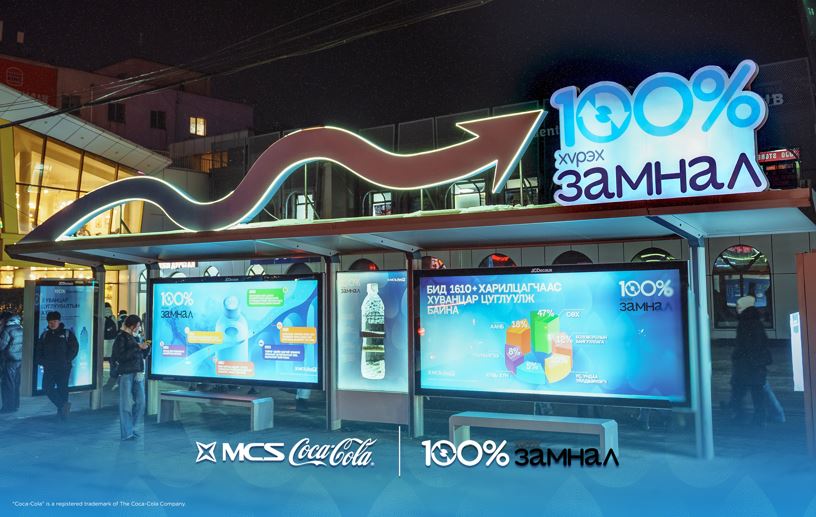
Did you know? MCS Coca-Cola has installed a “ROAD TO 100%” exhibition at the north bus stop near the Mongolian National University of Education. Visitors can receive plastic collection bags made from recycled materials at the exhibit. Once you have collected plastic, please remember to call 7610-7711 to arrange collection.
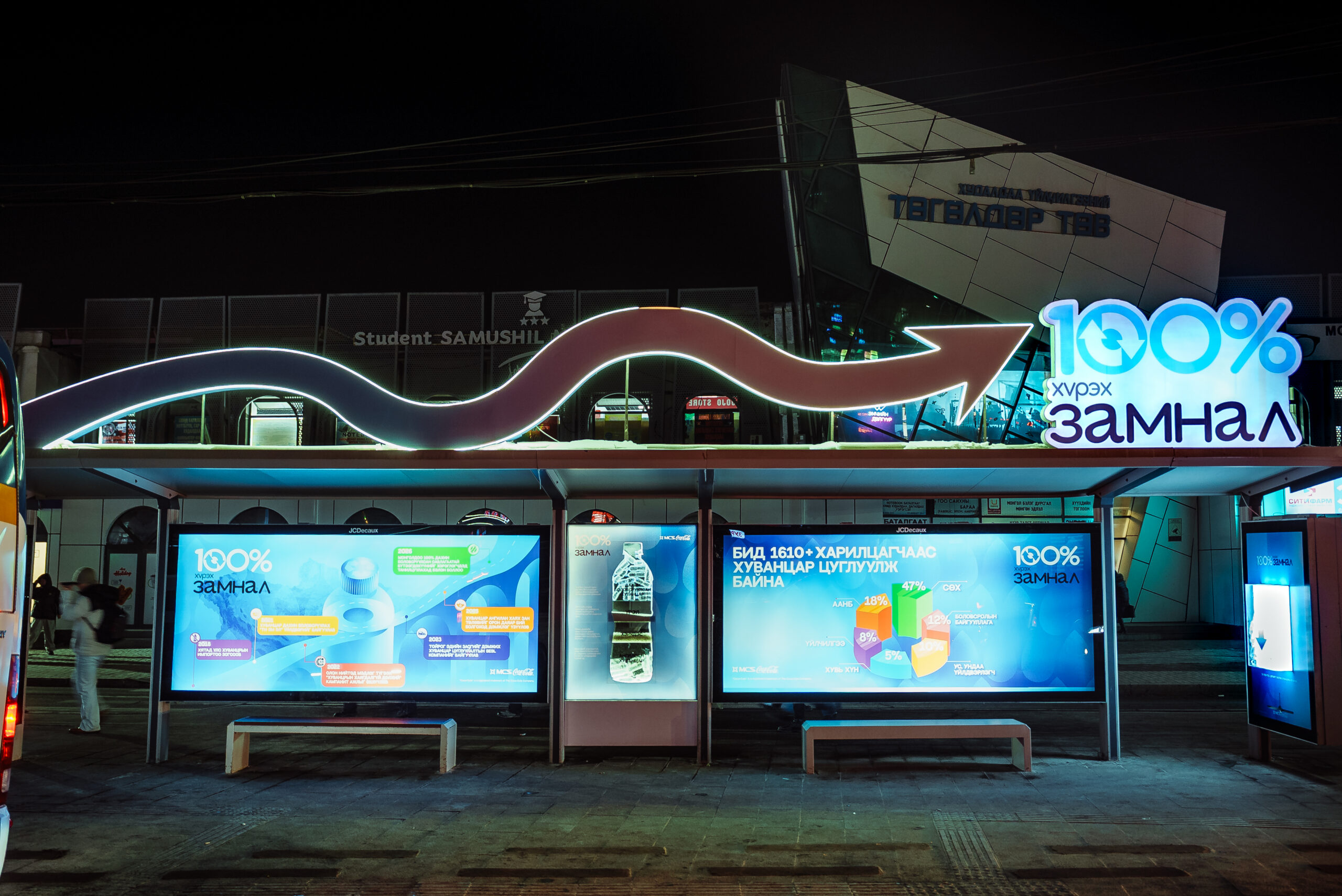
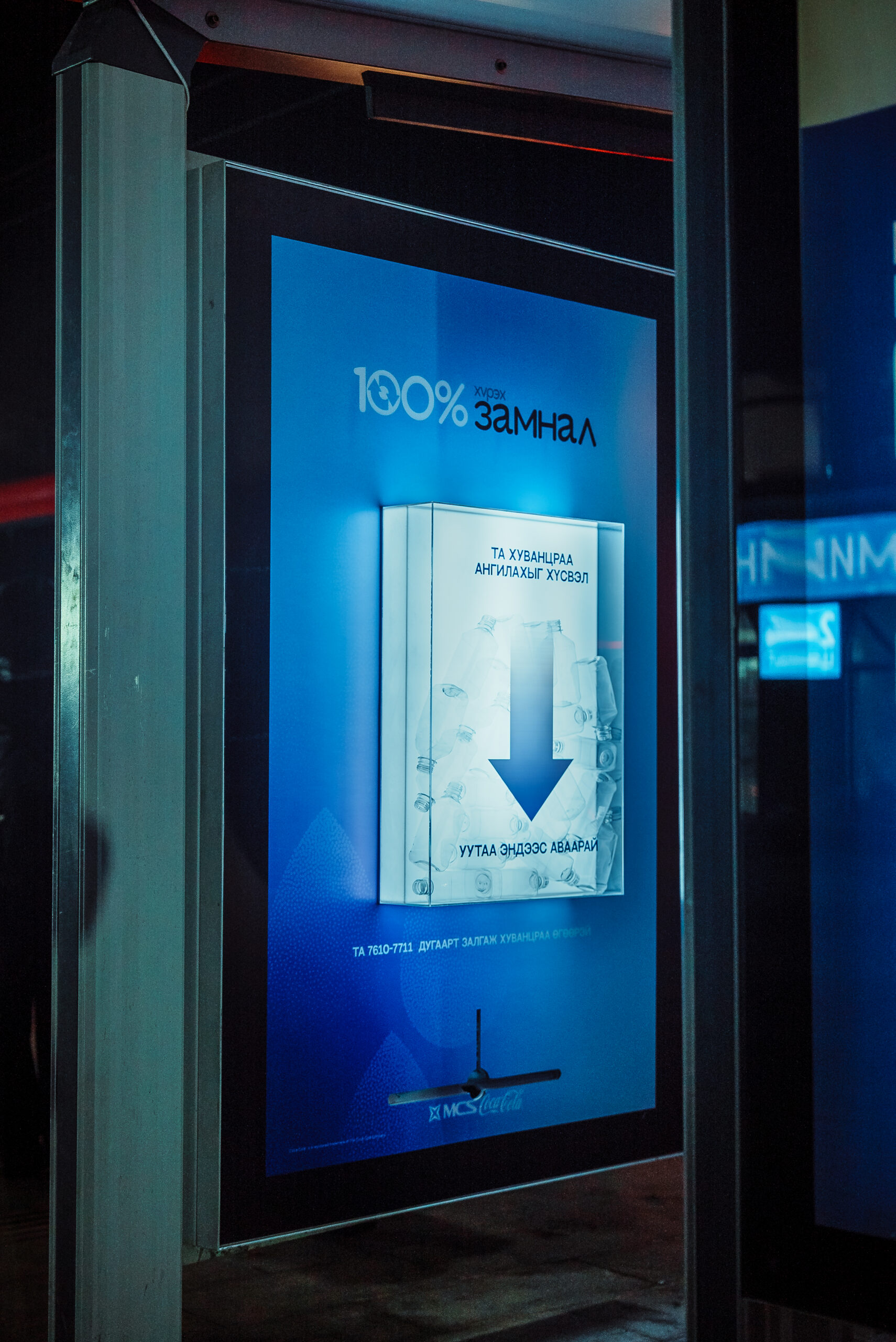
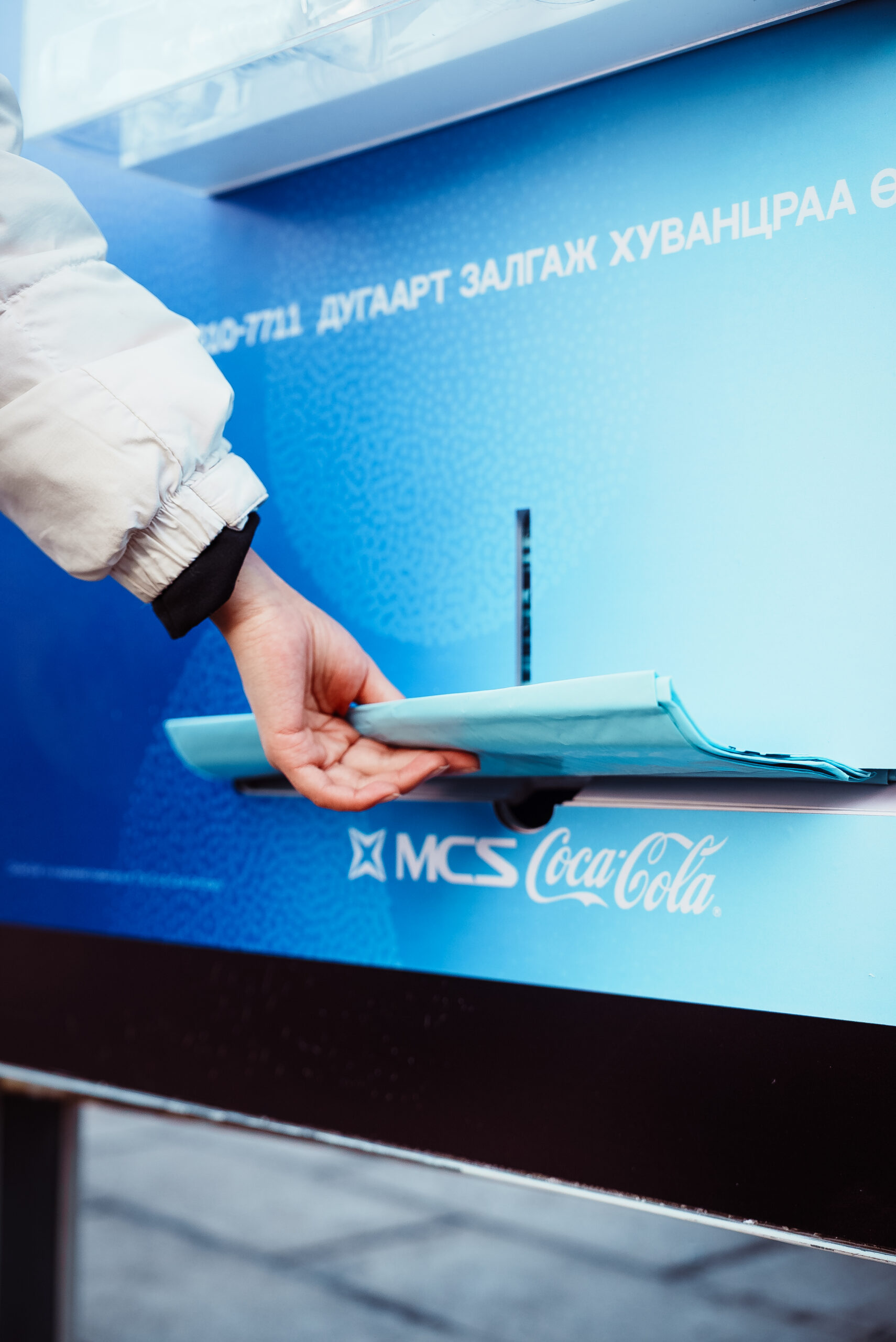
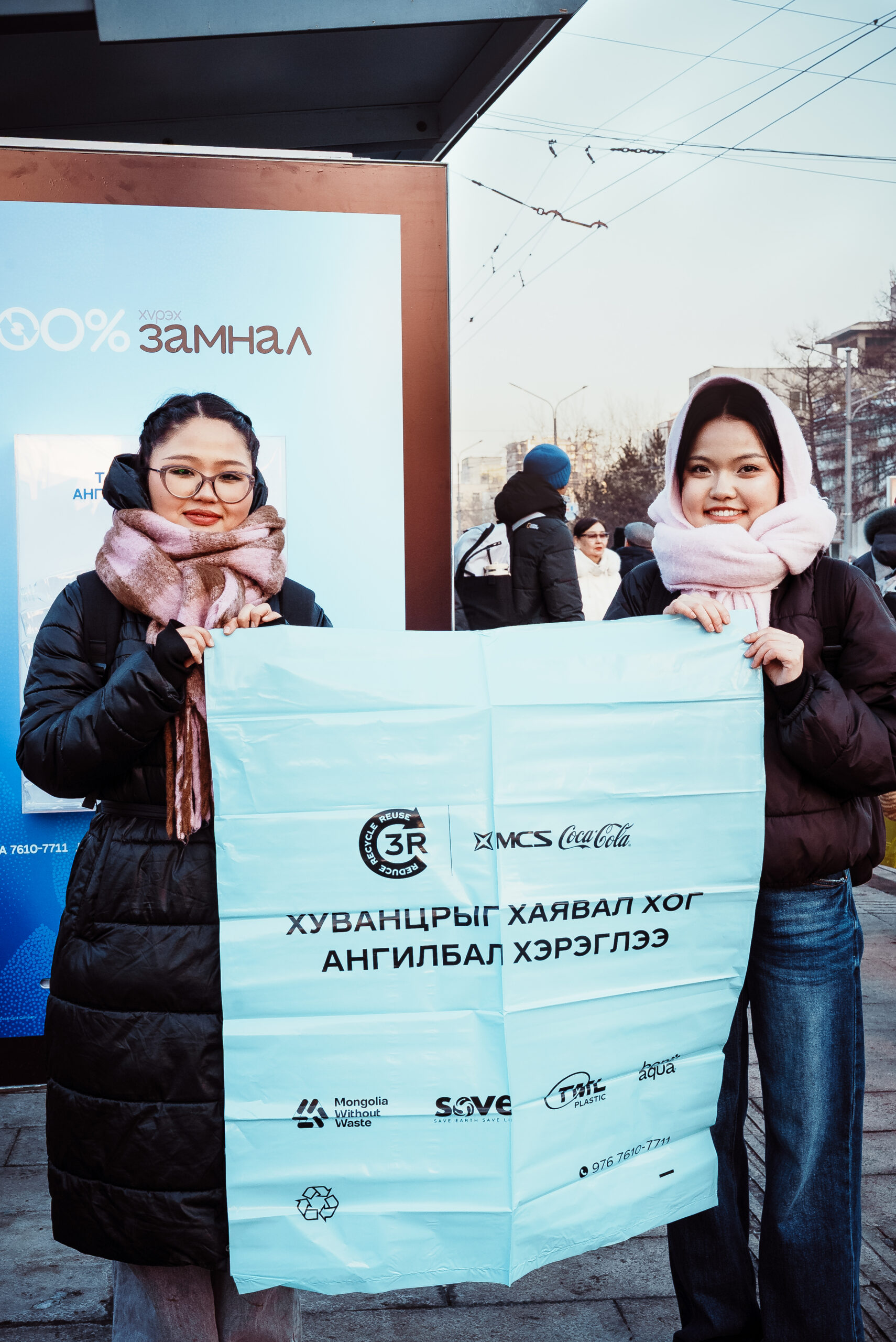
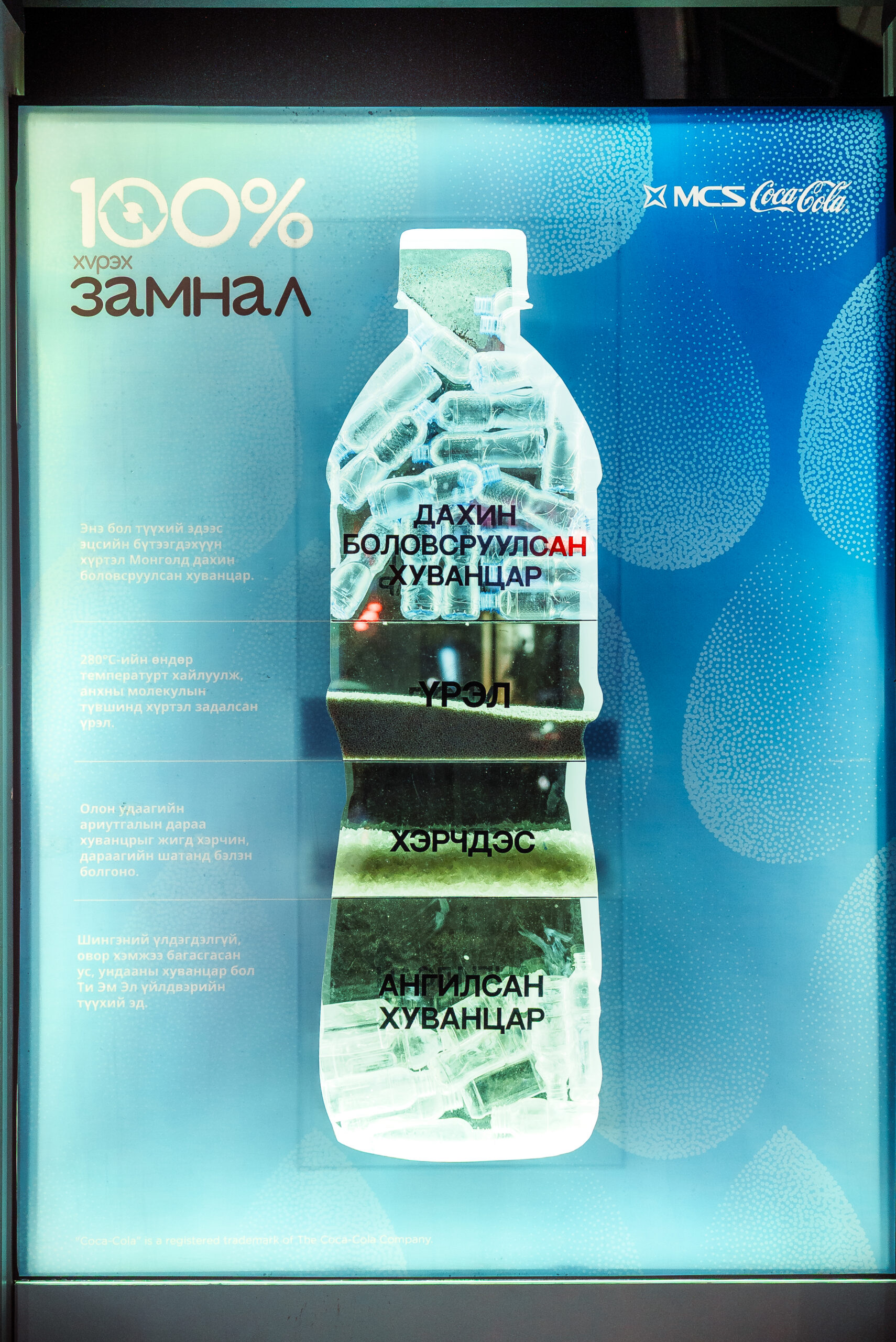
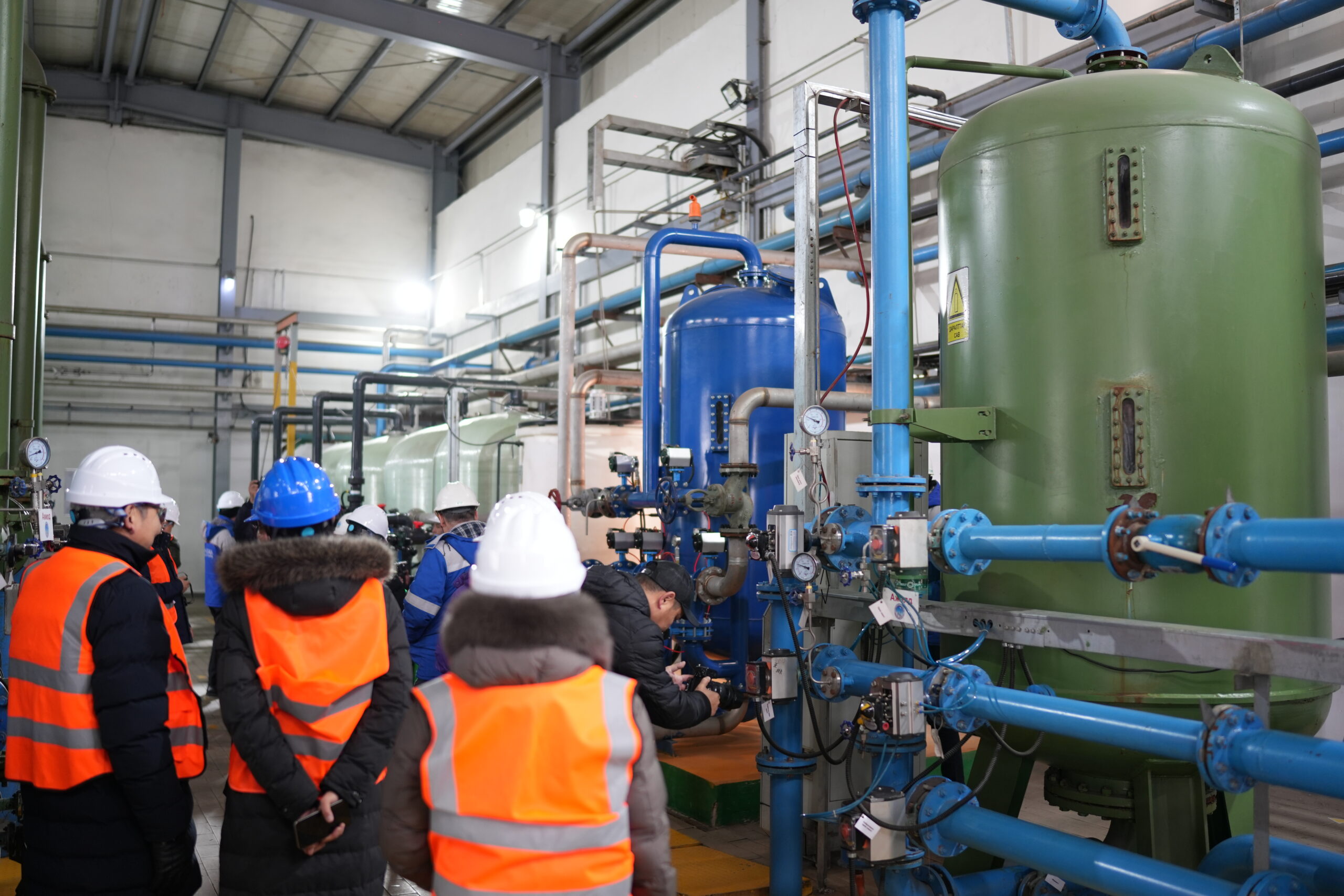 Photo caption: Pipelines and additional equipment installed with an investment of MNT 3.5 billion.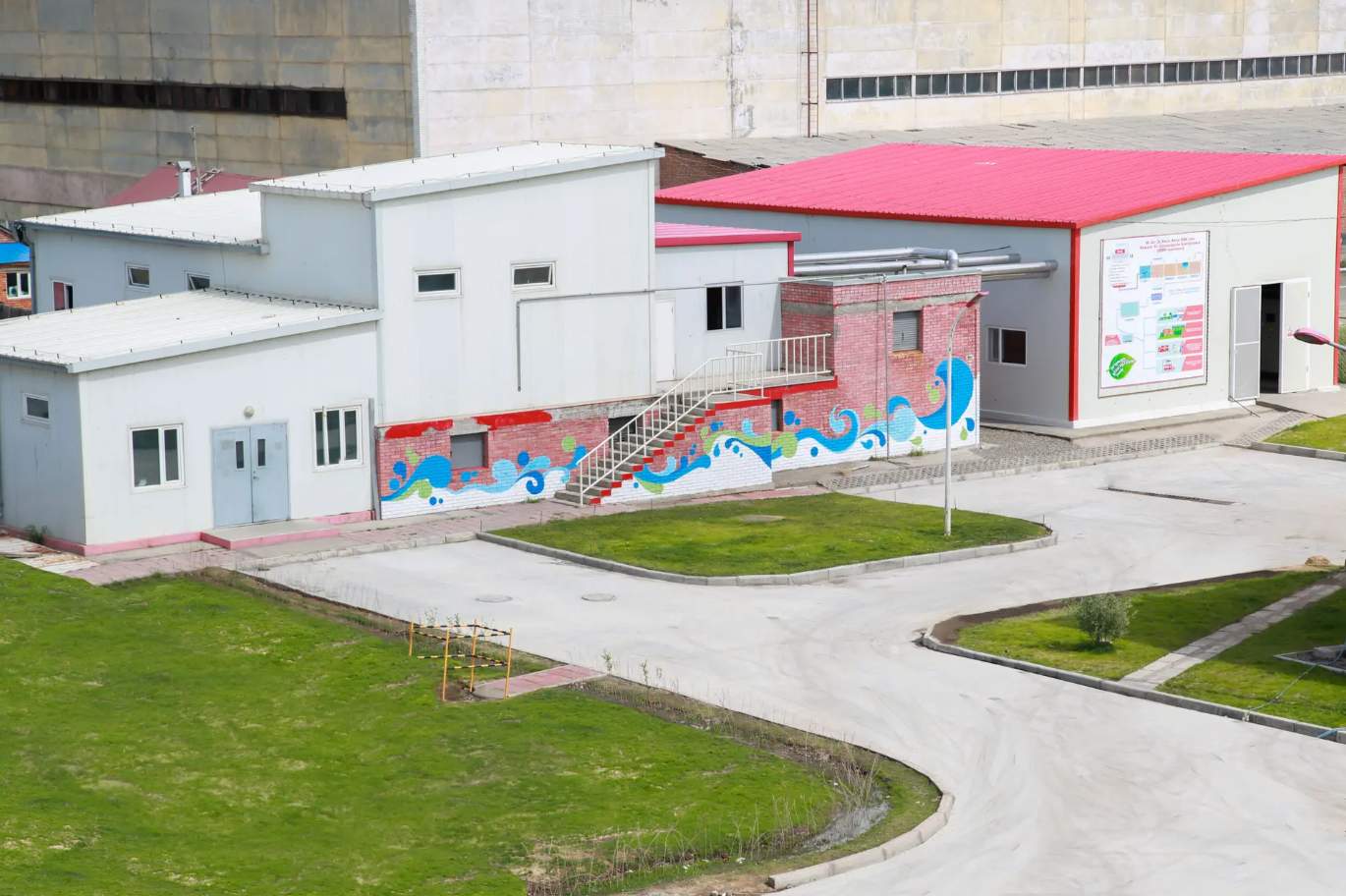
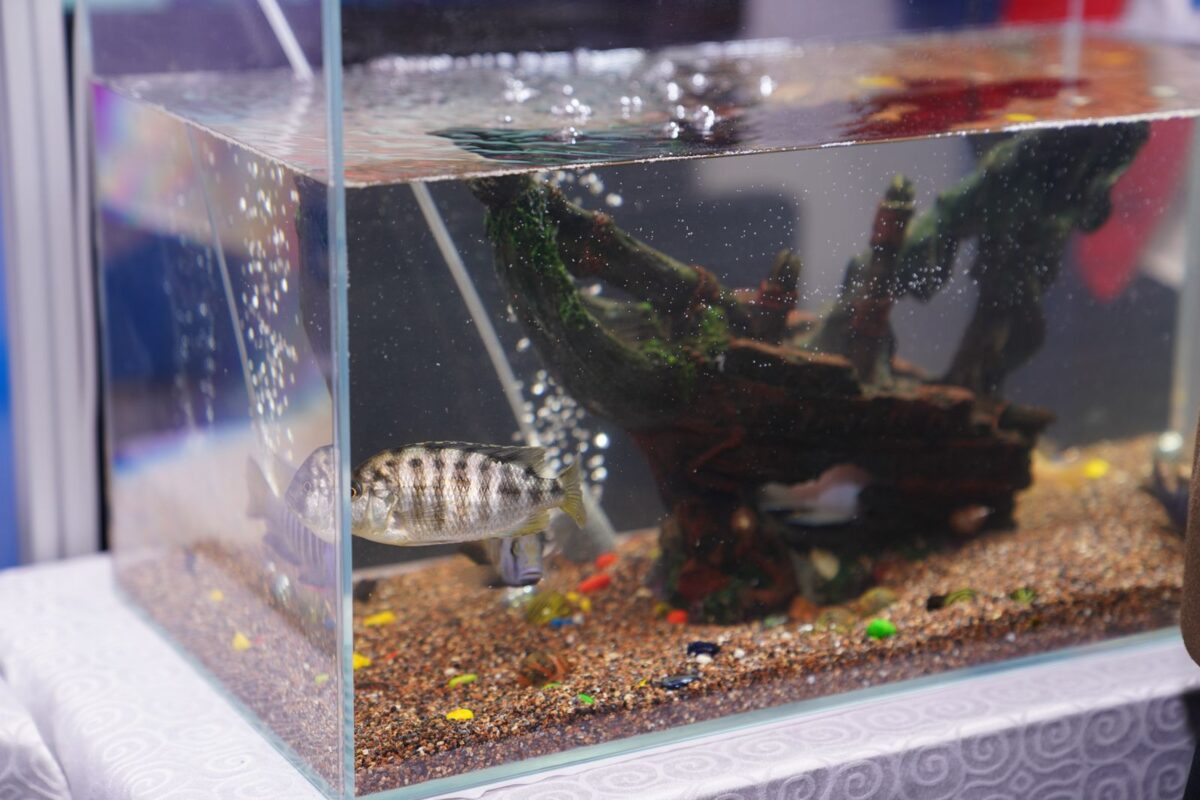
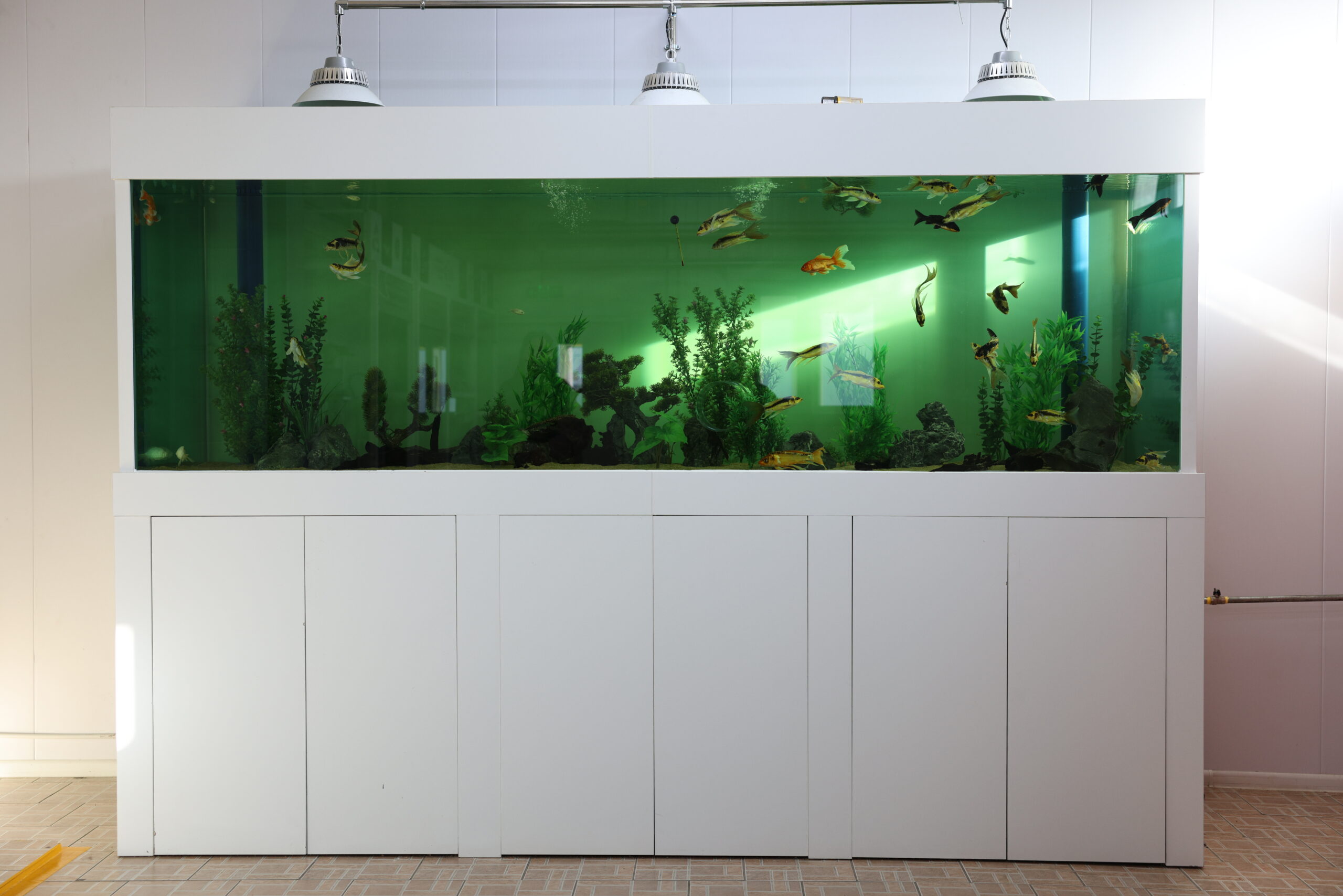 Photo caption: Fish can survive in industrial wastewater treated to a 99% purification level.